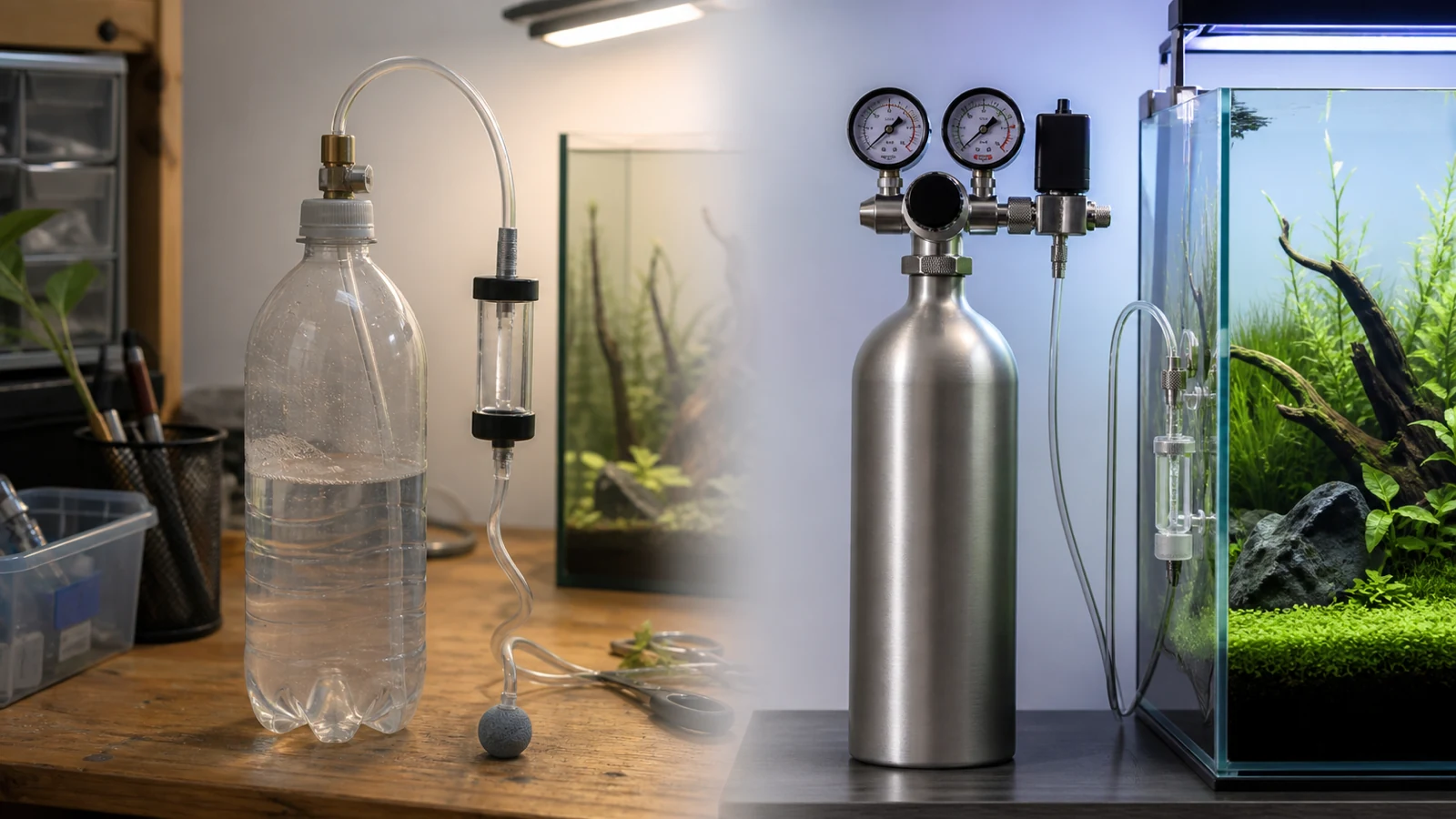
Diy Co2 Vs Pressurised Regulator Upgrade Uk
Direct answer: DIY CO2 is reasonable for a low-cost experiment or a small, forgiving tank. Upgrade to pressurised CO2 when unstable output, frequent bottle mixing, hard-to-repeat bubble rates or algae after CO2 dips are costing more attention than the saving is worth.
The practical difference is control. A pressurised cylinder with a regulator lets you set working pressure, tune flow through a needle valve, and use a solenoid on a timer. DIY yeast or citric systems can grow plants, but their output changes as the reaction ages.
Comparison table
| Decision point | DIY yeast/citric CO2 | Pressurised cylinder + regulator |
|---|---|---|
| Up-front cost | Lower to start. | Higher initial spend; Horizon Aquatics describes pressurised kits as a bigger investment than DIY: Horizon Aquatics' DIY versus pressurised CO2 comparison. |
| Consistency | Output rises and falls with the reaction. | Designed for repeatable pressure and bubble-rate control. |
| Daily workload | More mixing, monitoring and replacement. | More setup discipline, less routine mixing. |
| Timer control | Not a good fit for sealed yeast systems. | Solenoid timing is a normal pressurised-system feature. |
| Best fit | Nano trials, low-light tanks, learning. | High-light planted tanks, carpet plants, larger aquascapes, repeatable routines. |
Why the solenoid changes the routine
A pressurised setup can use a solenoid so CO2 follows the light period. Aqua Essentials describes the common pressurised stack as regulator, solenoid, bubble counter, diffuser and drop checker: Aqua Essentials' UK guide to aquarium CO2 systems.
That does not mean "set and forget". You still tune gradually, watch livestock and verify drop-checker colour. It does mean the on/off routine can be consistent instead of relying on memory every morning and evening.
Important safety line for DIY systems
Do not treat a yeast bottle like a pressurised cylinder. UKAPS hobby discussion warns against blocking a yeast DIY system with a solenoid because pressure can build in an uncontrolled container: UKAPS discussion on yeast DIY CO2 with a solenoid.
Upgrade checklist
- Confirm the cylinder thread before buying the regulator.
- Choose a regulator connection that matches the bottle, not the other way round.
- Use a needle valve so you can make small flow changes.
- Use a bubble counter for repeatable visual feedback.
- Use a drop checker and observe livestock while dialling in.
- Plan a timer schedule only after the gas path is leak-tested.
Who should wait
If the tank is low light, lightly planted, under roughly 40-50 litres, and the current DIY system is not causing instability, the upgrade may be more complexity than benefit. Spend first on stable lighting, flow and maintenance habits.
Next step
If you are upgrading because DIY output has become the weak link, choose the cylinder first and then check a regulator with the matching connection option. The DoublGauge product page is relevant once you know the thread you need: DoublGauge Pro CO2 regulator details.
FAQ
Will pressurised CO2 automatically fix algae?
No. It can remove one instability, but light, flow, fertiliser and maintenance still matter.
Can I keep DIY CO2 as a backup?
For experimentation, yes. For a high-light display tank, a stable pressurised setup is usually easier to repeat.